
Is Skin Whitening Treatment Safe? What You Should Know
- March 19, 2026
- Posted by: admin
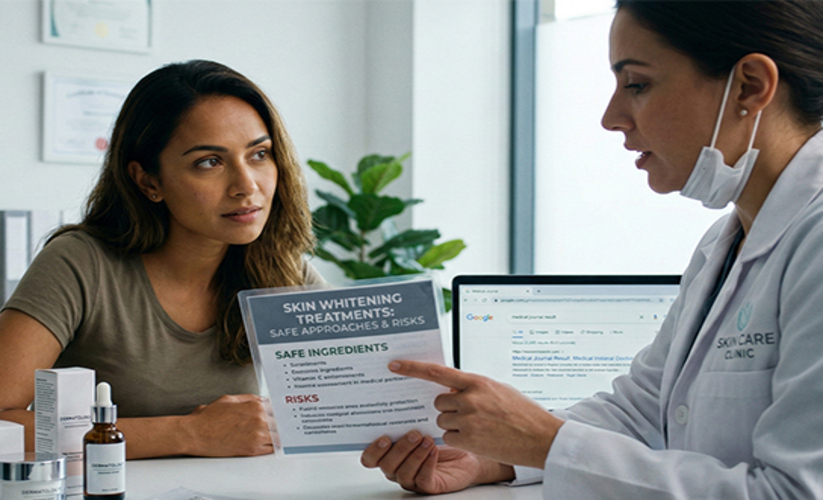
When we are planning to get a new treatment, a lot of questions take place and never leave our mind until we get a satisfactory answer, right? The same happens when individuals look for a skin whitening treatment.
Is it safe?
Does it have any side effects?
What are the different types of skin whitening treatments, and which one is the best for me?
Let us clear your doubts in this blog.
What is Skin Whitening Treatment?
Skin whitening treatments are dermatological procedures designed to reduce melanin concentration in the skin, aiming to treat hyperpigmentation, acne scars, and sun damage, and achieve a more even, brighter complexion. Common methods include chemical peels, laser therapy, glutathione injections, and topical creams, which work by inhibiting the tyrosinase enzyme responsible for producing skin pigment.
Here is what skin whitening treatments often address:
- Dark spots caused by sun exposure
- Hyperpigmentation from acne scars
- Uneven skin tone
- Age spots
- Freckles
- Melasma, which is a hormonal pigmentation
Now, the types of skin whitening treatment and the safety of the procedure.
Types and Safety of Skin Whitening Treatments
| Types | Are Skin Whitening Treatments Safe? |
Skin whitening treatments are also known as skin lightening. Here are some of the common types of skin whitening treatments:
| In the quest for flawless skin, skin whitening treatments have come far from just being traditional treatments. They are popular, and several individuals go for them. Skin whitening and lightening treatments are highly popular, driven by beauty standards that equate lighter, even-toned skin with attractiveness and success. The safety is highly dependent on the chosen dermatologist’s expertise and experience. Before going with the procedure, it is advised to discuss the risks and benefits with the practitioner and have realistic expectations. Here is more:
|
FAQs: Skin Whitening Treatment
Q1. Who is ideal to get skin whitening treatment?
Individuals dealing with melasma, freckles, age spots, dark spots, or skin tanning issues can go for the treatment. Candidates should be in overall good health, as this ensures better healing and reduces the risks of complications. Those without underlying, active skin conditions like severe eczema or active acne can go for the session.
Q2. Who cannot be ideal to get skin whitening treatment?
Extremely dark-skinned individuals may not be suitable for certain treatments like chemical peels. Those with heart conditions, recurring fever, or a tendency to scar should consult a dermatologist first. Individuals with a history of severe allergic reactions to skincare products may not be ideal.
Q3. Whom to consult for getting a skin whitening treatment?
For skin whitening or skin lightening treatments, you should consult a qualified and experienced dermatologist or cosmetologist. It is strongly advised to avoid over-the-counter creams or non-medical salons to prevent side effects like skin irritation, burns, or scarring.
Q4. Which skin whitening treatment is the most effective one?
The most effective skin whitening treatments involve: Chemical Peels, Laser Skin Lightening, Glutathione Injections or Drips and Topical Whitening Products.
Final Thoughts
At JSCC Wellness, you can consult an experienced professional to get an idea of the treatment and the right guidance. It is important that you choose an experienced expert, which is why we are here for you at JSCC Wellness. The time and money invested in a procedure matter, so invest it in the right place.
Reference